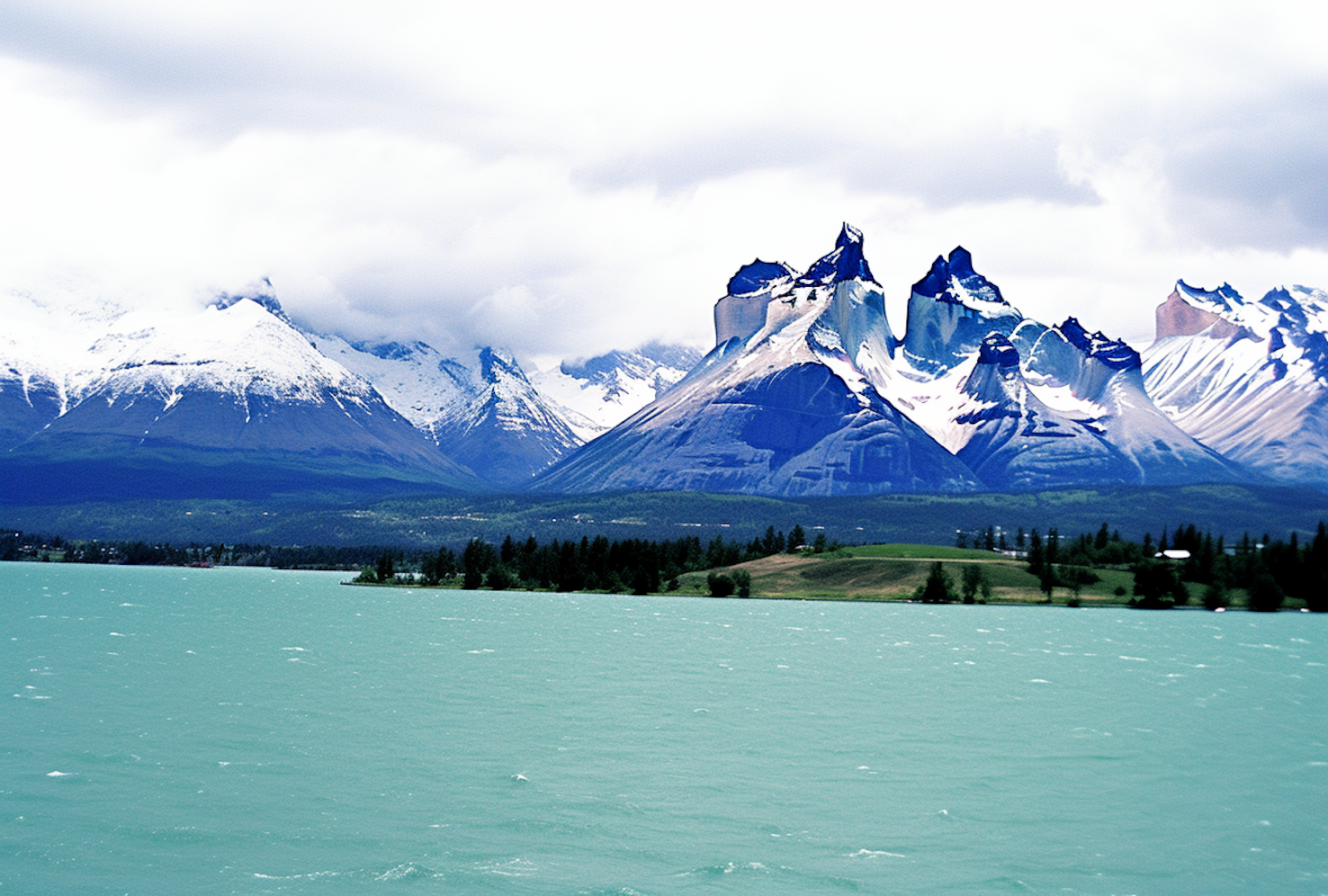
OceaniaPlanned for February 2028
New Zealand
Two narrow islands that fold fiords, glaciers, volcanoes and open farmland into distances short enough to drive.
New Zealand
- Region
- Oceania
- Languages
- English, te reo Maori and New Zealand Sign Language are all official
- Currency
- New Zealand dollar (NZD)
- Getting around
- Self-drive is the realistic option, by car or campervan
- Best months
- December to February
- Trip length
- Three to four weeks
The overview
Two long, narrow islands packing fiords, glaciers, volcanic plateaux and empty coastline into distances you can drive in a morning, best taken slowly with a car and no fixed plan.
New Zealand is two long, narrow islands that behave like a continent. Nowhere is far from the sea, and yet within a single morning's drive you can pass from rainforest to braided river to a bare alpine pass and back down to a beach. I have watched enough footage of the place to know that the scale never quite lands on camera, which is exactly why I want to go and try anyway.
The mistake everyone warns you about is treating the map as a to-do list. Distances look modest and then the road starts climbing, or winding along a coast, or stopping altogether for roadworks and sheep, and a two-hour hop becomes most of the afternoon. The country rewards the opposite instinct: fewer places, longer stays, and a willingness to sit out a day of rain because the following morning will be clear. Almost everyone I have spoken to says the same thing, that they tried to see too much.
So I am giving it room. Roughly a month in February 2028, with the bulk of it on the South Island and only a short stretch in the north, travelling by road and staying put wherever the light is good. It is the longest trip on my list by some margin, and the only one where I have deliberately left whole weeks unplanned. February should mean settled weather, long evenings and water warm enough to swim in, at least on the good days.
Things to see and do
What I am going to New Zealand for
The list I am actually working from, rather than everything a place is known for.
Sail into the fiords of the south-west
The deep glacial inlets of the far south-west are among the wettest places in the country, and that is rather the point: rain turns every cliff face into a waterfall. Day cruises and overnight boats both run from the main jetties, and the earliest sailings tend to be calmer and quieter. Take the weather as a feature rather than a setback, and confirm current schedules with the operator.
Base yourself in the alpine lake district
The southern lakes sit in old glacial troughs with mountains dropping straight into them, and the towns on their shores make the obvious base for a week. It is the busiest corner of the South Island in summer, so book beds early and walk out of town in the first hour of daylight. The lakes stay cold all year; swim anyway, briefly.
Commit to one long alpine walk
The country's best-known walking tracks are rationed: the multi-day routes need huts booked months ahead, often the moment bookings open for the season. If you miss out, the full-day alpine crossings are the consolation, and they are superb. Carry layers for four seasons regardless of the forecast, start at first light, and be genuinely willing to turn around if the weather closes in.
Give the geothermal country a full day
The middle of the North Island steams. Mineral terraces, mud pools and pale silica flats sit alongside lakes and forest, and several of the parks are managed in partnership with Maori landowners, whose relationship with this ground long predates any visitor path. Go early, while the mist still hangs and the colours are richest, keep to the boardwalks, and accept that the smell of sulphur follows you back to the car.
Walk in to the glacier valleys
On the west coast of the South Island, ice comes remarkably low, down through temperate rainforest almost to the sea. The valley walks to the terminal faces are short and mostly flat, though the marked viewpoints keep moving back as the ice retreats. Access on to the glaciers themselves is by guided trip only, usually by helicopter, and weather cancellations are common, so leave a spare day.
Drive the green hill country of the central North Island
Between the volcanoes and the coast the North Island turns into deep green farmland: sheep, shelter belts, dairy sheds and valleys that hold mist until mid-morning. There is nothing to tick off here, which is the appeal. Take the smaller roads, pull over often, and give the light an hour to work. It is the landscape most people picture and the one most itineraries drive straight through.
Stay up for the southern night sky
Parts of the interior have some of the darkest skies anywhere, protected by lighting rules that keep whole basins properly black. On a clear moonless night the southern sky is unrecognisable from a northern one, with the Magellanic Clouds and the dark lanes of the Milky Way visible to the naked eye. Check the moon phase before fixing dates, dress far warmer than the daytime suggests, and allow twenty minutes for your eyes to adjust.
Keep the daily driving short
The single best piece of advice I have been given is to plan for no more than two or three hours of driving a day. Roads are mostly single carriageway, often winding, and slower than any map estimate suggests, particularly in a campervan. Shorter legs leave room for the unplanned stop, which is where the trip actually happens. In remote areas, fuel up whenever you can rather than when you need to.
Watch the coast for wildlife
Seals, dolphins, penguins and albatross are all reasonably approachable from the right stretches of coast, and several southern headlands have marked viewing points where you simply wait. Boat trips run for whales and dolphins from a handful of coastal towns, weather permitting. Keep well back from resting seals and nesting birds, stay behind the ropes, and treat every sighting as luck rather than an entitlement.
How to get there
Routes in, and how to move once you arrive
General guidance on the realistic ways to reach the destination. Routes, operators and journey times change, so confirm the current position before you book anything.
By air
Long-haul flights into the main international gateways
Almost everyone arrives by air, through the international airports serving the largest city in the north and the main gateway on the South Island's east coast. Almost every routing from Europe involves at least one stop, typically in the Gulf, Asia or North America, and total journey times often exceed twenty-four hours door to door. Allow a full day at each end simply to recover. Routings and seasonal frequencies change, so confirm current schedules with the airline before building anything else around them.
By rail
A short list of scenic lines, run as experiences rather than transport
The passenger rail network is small, and the handful of long-distance services that survive are sold as sightseeing journeys rather than a way of getting somewhere. The routes that cross the Southern Alps and run along the eastern coast are genuinely spectacular, with open-air viewing carriages and commentary, but they are infrequent, seasonal in places, and will not take you to most trailheads. Treat a rail day as one of the trip's set pieces and check current operating days before you plan around it.
By road
Hire a car or campervan and drive on the left
Self-drive is how the country is designed to be seen. Hire cars and campervans are widely available at the main airports and ferry terminals, and one-way rentals between the islands are usually possible for an additional fee. Traffic drives on the left, most highways are single carriageway, and journey times run considerably longer than the distance suggests once you factor in bends, hills and gravel side roads. An international driving permit may be required depending on your licence, so check before you travel.
By sea
The inter-island ferry across the strait
Vehicle and passenger ferries link the bottom of the North Island with the top of the South, and the crossing typically takes something in the region of three to four hours. The final approach through the drowned valleys at the northern end of the South Island is one of the best hours of the whole journey, so stay on deck for it. Book vehicle space well ahead in summer, arrive early for loading, and expect the occasional cancellation when the strait is rough.
Getting around
Domestic flights and intercity coaches fill the gaps
If you would rather not drive every leg, a reasonably dense domestic air network connects the main cities and a number of regional towns, which can save the best part of a day on a long transfer. Intercity coaches cover most routes a visitor would want, though usually once or twice a day rather than hourly, and they are slow. Public transport within the cities is workable but thin outside them, so anything rural or coastal realistically still needs a car.
When to go
The year, season by season
What each part of the year actually feels like on the ground, including the months I would avoid.
Best monthsDecember to February
Summer
December to February
The best window, and the one I am aiming for
Long daylight, the most settled weather of the year, and daytime temperatures commonly in the low twenties Celsius, warmer still in the sheltered inland basins. Every walking track, hut and campsite is open, and so is every booking system, which is the catch: this is peak domestic holiday season as well as peak international season, so accommodation and vehicle hire go early and cost the most.
Autumn
March to May
Almost as good, and considerably quieter
The crowds thin from about the middle of March while the weather often stays settled well into April. Days shorten and mornings turn crisp, with temperatures easing back through the mid to low teens Celsius, but the light sits lower and warmer and the beech forests turn. Higher passes can see early snow by May, so check road conditions before committing to an alpine route.
Winter
June to August
Ski season in the south, mild and wet in the north
The southern mountains come into their own, with resorts running above the alpine lake towns and a completely different atmosphere in the valleys below. Expect short days, hard frosts and inland temperatures around or below freezing overnight. Some walking tracks and alpine roads close or require chains, the north stays mild but wet, and a number of visitor operations run reduced services or shut entirely.
Spring
September to November
Changeable, green and much better value
Four seasons in a day is not a joke in spring: warm sun, hail and a gale can all arrive before lunch. Rivers run high with snowmelt, some alpine tracks stay closed into November, and the wind can be relentless. In exchange you get lambs in every paddock, waterfalls at full volume, far fewer people and much better availability on almost everything.
Photo gallery
New Zealand in frames
Reference images gathered while planning the trip, shot wide and graded for contrast.
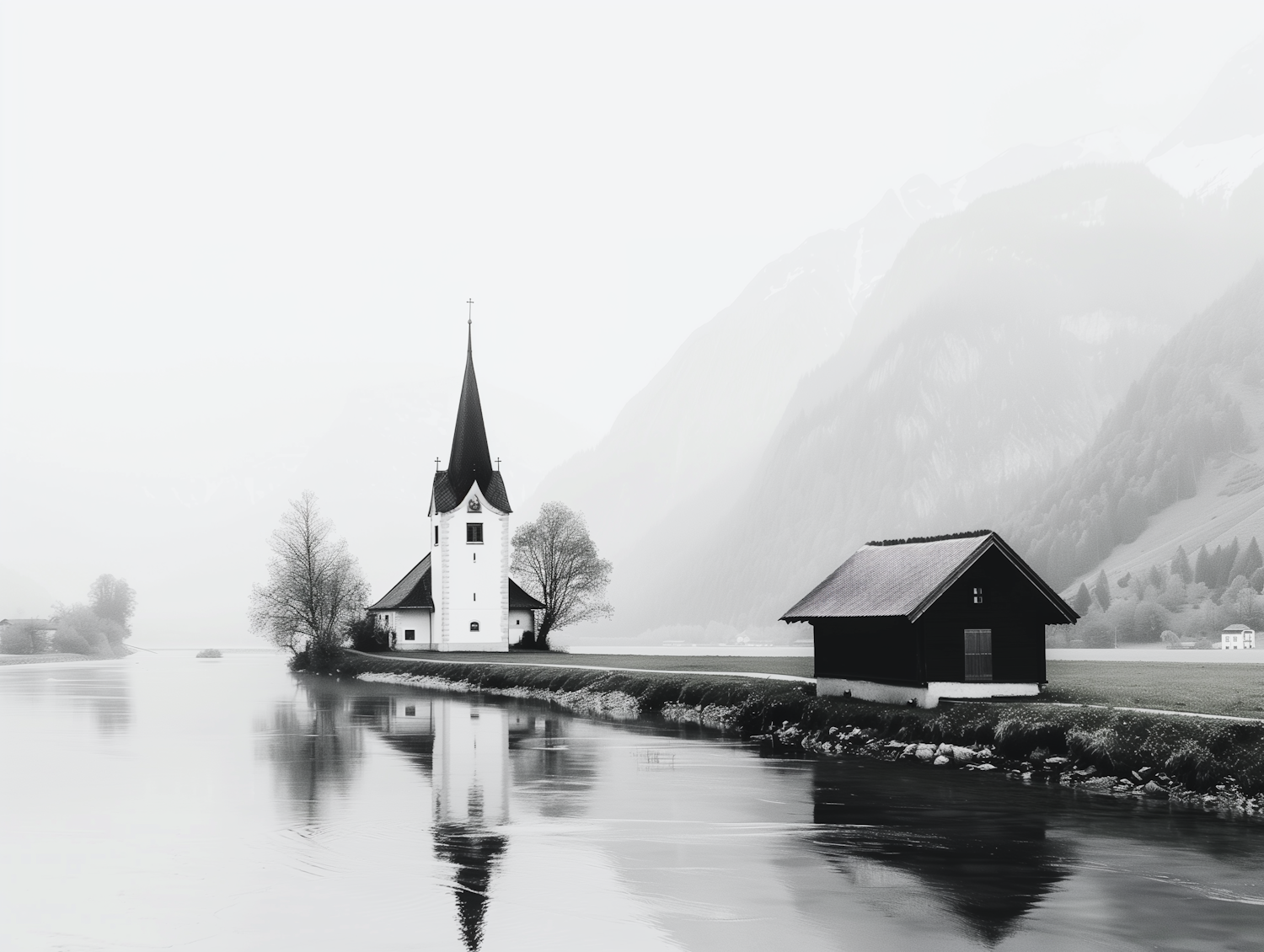
A tiny lakeside chapel on a windless, colourless morning 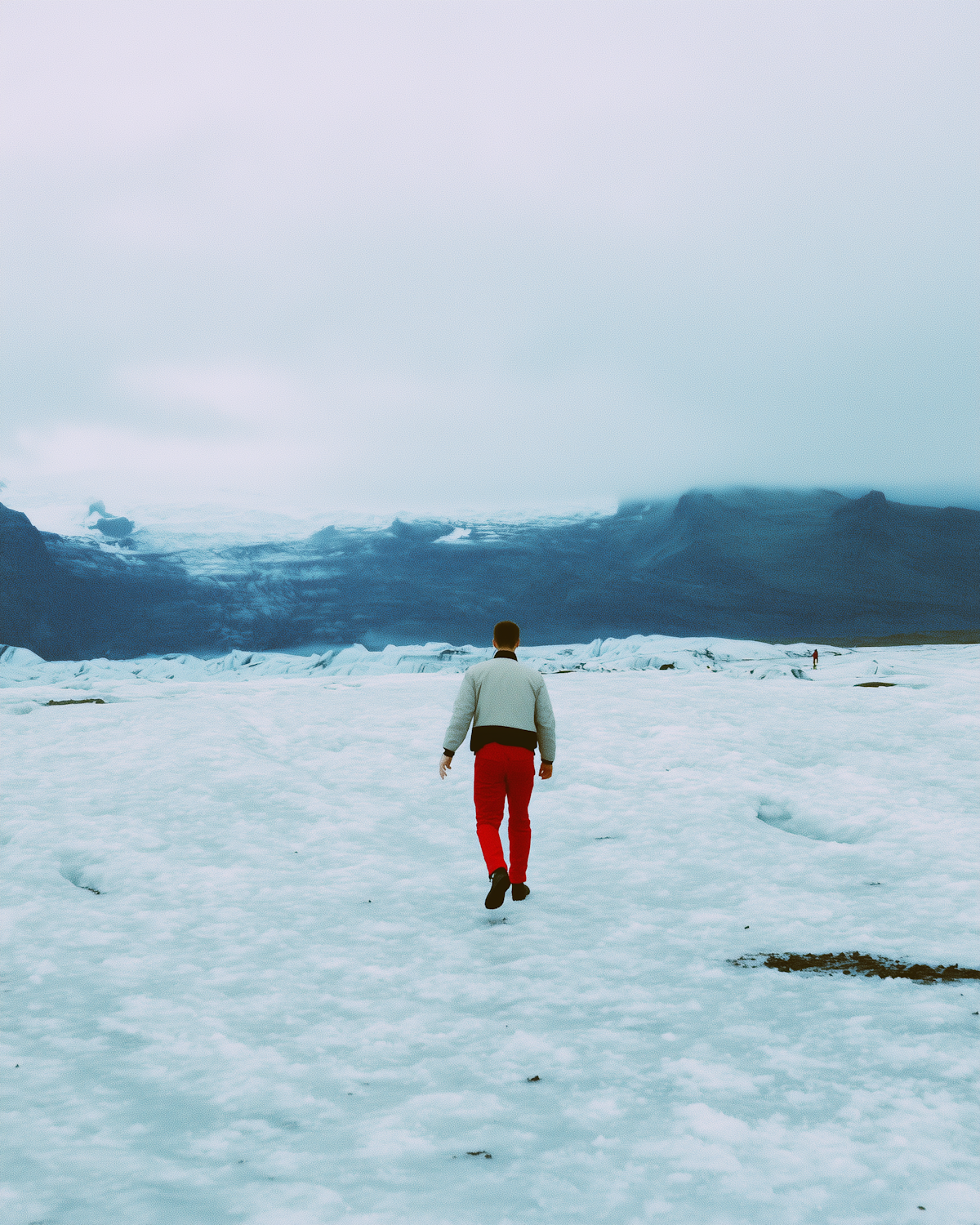
Crossing a snowfield alone, with the range still ahead 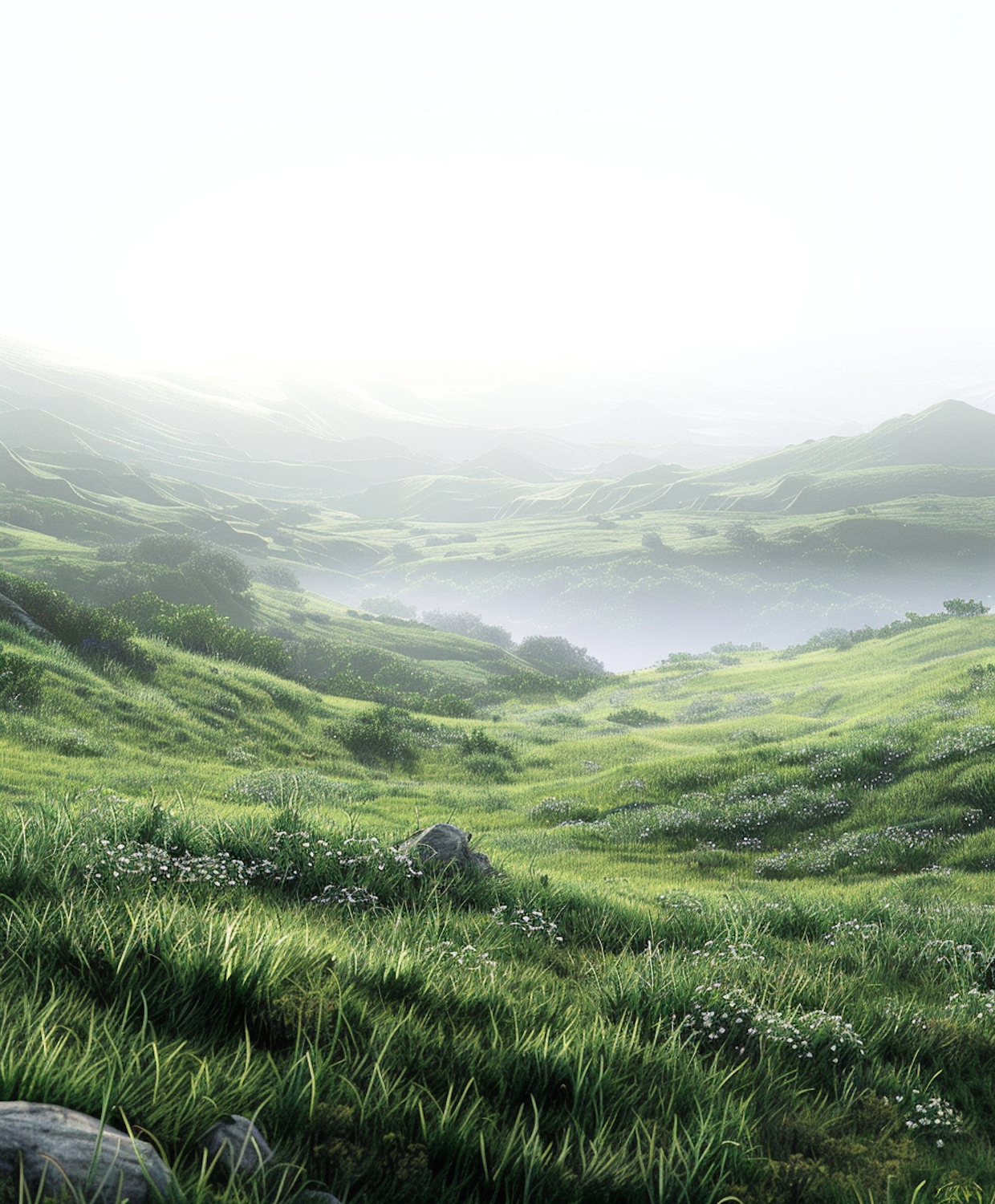
Hill country holding its mist well into the morning 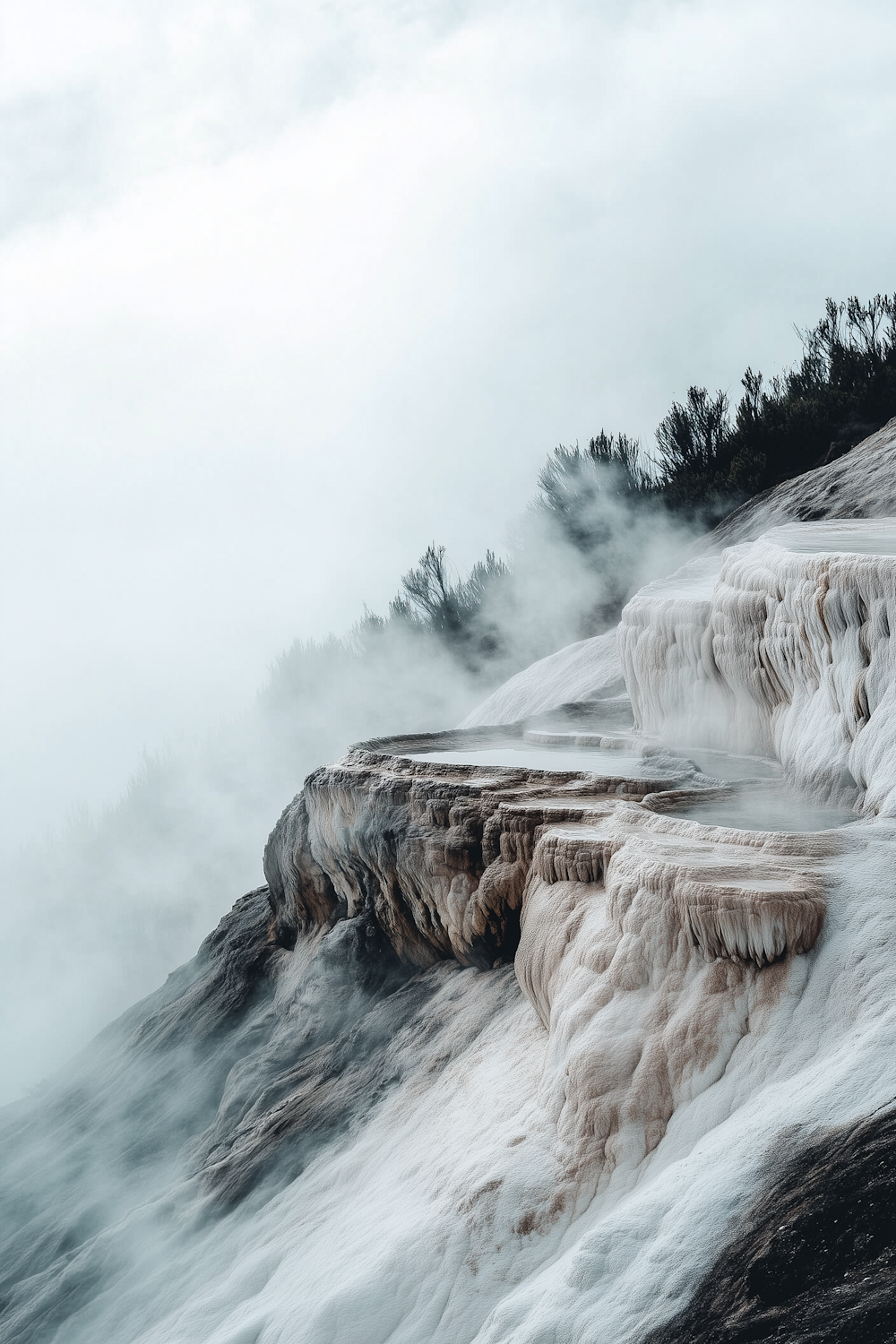
Steam drifting off mineral terraces in geothermal country 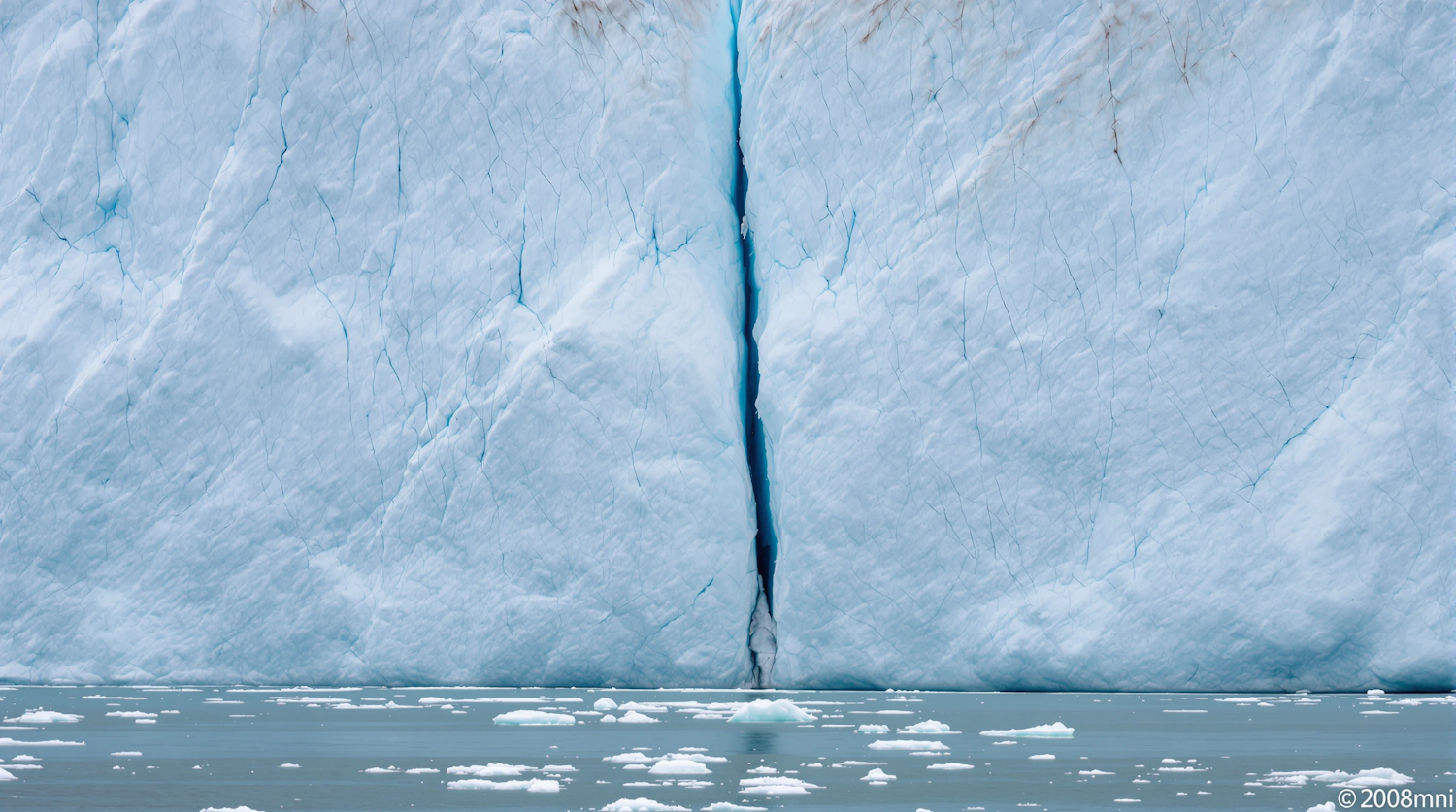
A glacier face and the ice it has shed, floating on still water 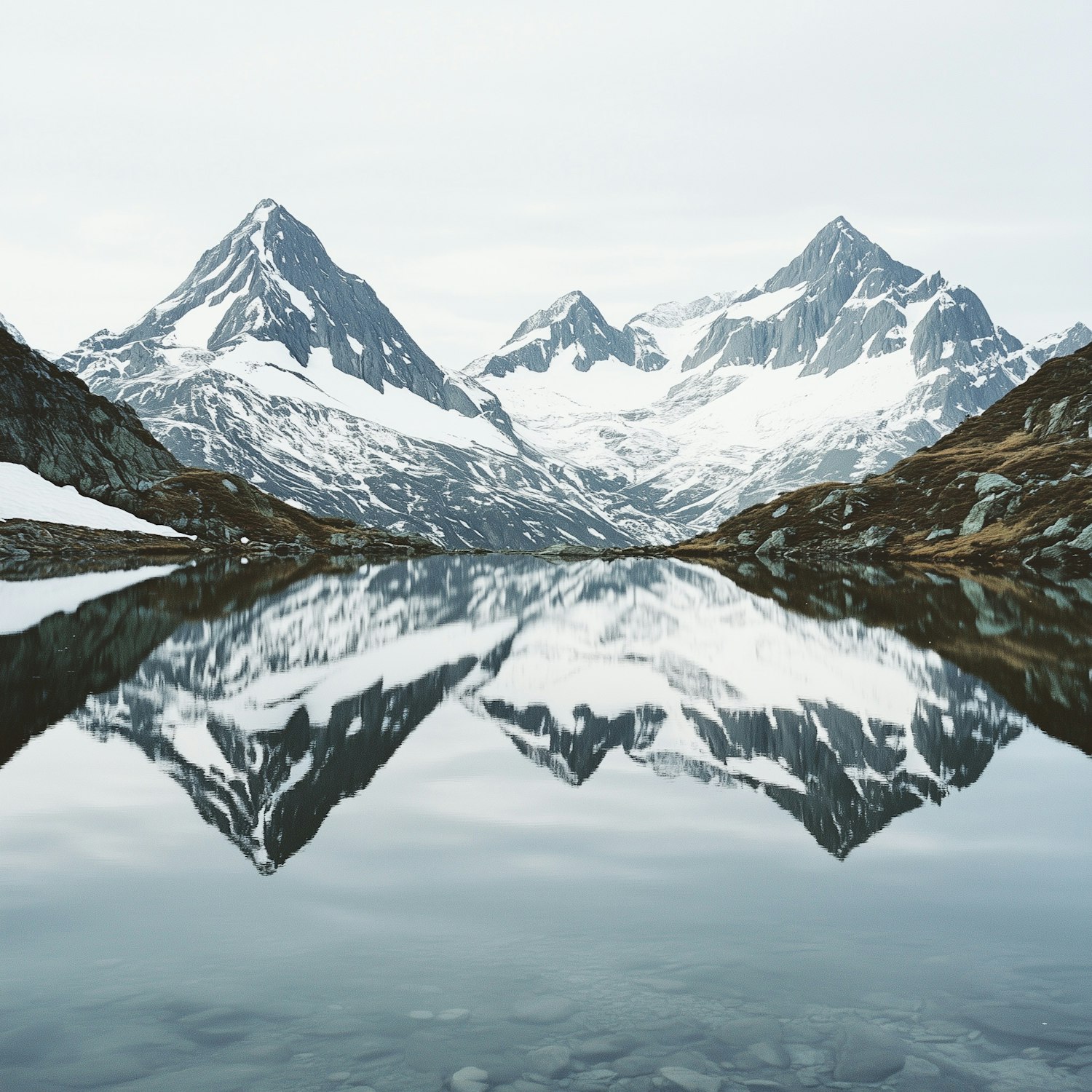
Not a breath of wind on an alpine lake